Know about ulcers and more with DHAANYA’S DENTAL CLINIC in Mogappair!
Mouth ulcers, also known as canker sores or aphthous ulcers, are painful lesions or sores that can develop on the mucous membranes of the mouth. They are typically round or oval with a white or yellow center and a red border. Here are some key points about mouth ulcers:
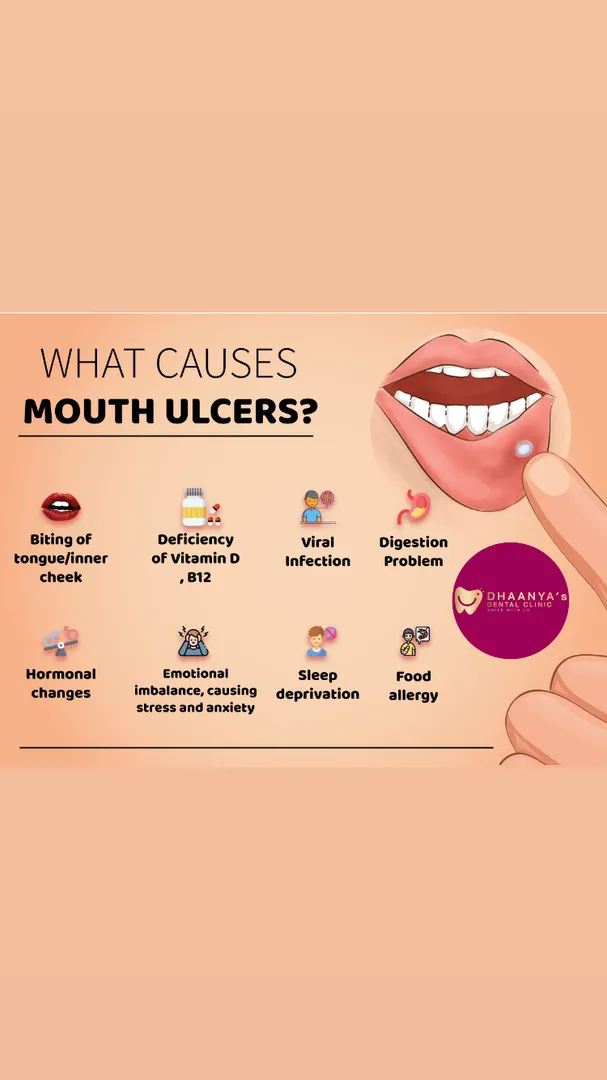
1. **Causes**: Mouth ulcers can be caused by various factors, including minor injury from dental work, aggressive brushing, or accidental biting of the cheek or tongue. Other causes may include stress or tissue injury from braces or dentures. They can also be associated with certain medical conditions, such as autoimmune diseases or nutritional deficiencies.
2. **Symptoms**: The primary symptom of a mouth ulcer is pain or discomfort, particularly when eating, drinking, or brushing teeth. They can vary in size and may occur as a single ulcer or multiple ulcers at the same time.
3. **Treatment**: In most cases, mouth ulcers heal on their own within 1-2 weeks without any specific treatment. However, to manage symptoms and promote healing, you can:
- Use over-the-counter topical treatments like mouth rinses or gels containing ingredients such as benzocaine or hydrogen peroxide.
- Avoid spicy, acidic, or rough-textured foods that can irritate the ulcer.
- Maintain good oral hygiene by using a soft-bristled toothbrush and avoiding aggressive brushing.
- If the ulcers are severe or persistent, your dentist or doctor may prescribe corticosteroid medications or other treatments.
4. **Prevention**: While not always preventable, you can reduce the risk of developing mouth ulcers by:
- Avoiding foods that may trigger ulcers, such as acidic fruits or spicy foods.
- Managing stress, as emotional stress can sometimes trigger or worsen ulcers.
- Taking care with oral hygiene to minimize tissue damage.
5. **When to see a doctor**: You should consult a healthcare professional if you have large, painful ulcers that do not heal within a few weeks, recurrent ulcers, fever, swollen lymph nodes, or if the ulcers are interfering with your ability to eat or drink.
If you're experiencing mouth ulcers frequently or they're particularly bothersome, it's a good idea to discuss this with your dentist to determine potential underlying causes or additional treatments that may be helpful.
Keywords