

+918043692696

Currently it only shows your basic business info. Start adding relevant business details such as description, images and products or services to gain your customers attention by using Boost 360 android app / iOS App / web portal.

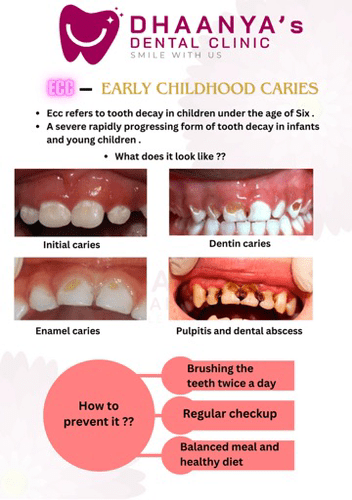
Treatment for Early Childhood Caries (ECC) depends on the severity of the condition and the child’s age. Here’s a breakdown of common treatment options: 1. Fluoride Treatments - Topical Fluoride Varnish: Applied directly to the teeth to strengthen enamel and slow down or reverse early decay. - Silver Diamine Fluoride (SDF): A liquid that can stop cavities from progressing. It’s often used in young children, as it requires no drilling, though it can cause a dark stain where applied. 2. Dental Fillings - Tooth-Colored Fillings (Composite Resins): If cavities are present but not too deep, fillings can restore the structure and function of the tooth. Composite materials are often chosen for aesthetic reasons. 3. Stainless Steel Crowns - For extensive decay that weakens the structure of the tooth, stainless steel crowns may be placed to cover and protect the remaining tooth, especially on molars. 4. Pulpotomy or Pulpectomy (Baby Root Canal) - If the decay has reached the tooth’s pulp (the nerve inside), a pulpotomy(partial removal of the pulp) orpulpectomy(complete removal of the pulp) may be necessary. This helps save the tooth and prevent infection. 5. Tooth Extraction - In cases of severe decay where the tooth cannot be saved, it may need to be extracted. If a tooth is removed early, space maintainers may be used to prevent misalignment of other teeth. 6. Behavioural and Preventive Measures - Dietary Changes: Limiting sugary snacks and drinks, especially between meals, is critical to prevent further decay. - Oral Hygiene: Teaching parents and children proper brushing and flossing techniques to maintain healthy teeth and prevent future issues. 7. Sedation or General Anesthesia - For young children or those with extensive decay, treatment may be done under sedation or general anesthesia to make the procedure more comfortable. Aftercare - Following treatment, it's important to establish a good oral hygiene routine at home, including brushing twice a day with fluoride toothpaste and visiting the dentist regularly for check-ups and cleanings. Preventing ECC through education, routine care, and early detection is essential to avoiding invasive treatments.


